PreHospital Readiness

What is a Pediatric Readiness Recognition Program and why is it important?
The unique healthcare needs of children coupled with the dynamic activity of prehospital care creates unique challenges while working with limited resources in frequently challenging environments. All this, with an expectation to be able to provide all the necessary care and support the child requires. Pennsylvania EMS providers typically see pediatric patients as less than 10% of their overall patient contacts. This limited frequency of pediatric interactions results in clinicians being less familiar with – and often less confident in – providing pediatric care. Being Pediatric Ready can reduce anxiety and increase confidence through improved competence for EMS clinicians. Related research around emergency departments suggests it may also improve patient prehospital outcomes.
Pennsylvania’s Pediatric Readiness Recognition Program for EMS works around a set of focus areas with specific criteria for each area, escalating across three levels of recognition. These criteria and requirements were taken from the original program along with additional items added from national standards and industry expectations. The program was developed by a group of peers including Pediatric Emergency Care Coordinators, agency leaders, medical directors, and regional EMS council representatives. Altogether, the program takes pediatric readiness to a higher level of engagement and responsibility of the agency and its clinical team.

Program Document Clarifications
July 28, 2025: Pediatric Recognition Program Equipment and Supplies – Bleeding, Hemorrhage Control, Shock Management, and Wound Care section, Chest Decompressions needles are NOT required at the IALS Ambulance or Squad licensure levels. The handbook will be updated with next publication. (Revised in Additional Equipment and Supplies version 1.3 10/13/25)
October 13, 2025: Pediatric Recognition Program Equipment and Supplies – Bleeding, Hemorrhage Control, Shock Management, and Wound Care section. Changed “Must be 14g and 1.5″ only” to “Must be 14g and 1.5″ maximum length”. (Revised in Additional Equipment and Supplies version 1.3 10/13/25)
October 13, 2025: Pediatric Recognition Program Equipment and Supplies – Medication Delivery and Vascular Access section. BLS level QRS, Ambulances, and Squads, need only carry the Additional BLS level equipment identified in these two sections of the document. For BLS level agencies, the revised text should read:
- Two (2) filter needles or straws to draw from a glass vial (if used) and at least two (2) hypodermic needles 22-25 gauge (one (1) 5/8 inch and one (1) 1-1.5 inches in length).
- Two (2) sterile syringes specially marked to only indicate a dose of 0.15mg or 0.3mg.
(Revised in Additional Equipment and Supplies version 1.3 10/13/25)
October 31, 2025: Updated Application Process Workflow chart to version 1.4
October 31, 2025: Updated Pediatric Recognition Program Equipment and Supplies document to version 1.4
Prepared for Pediatrics – EMS program outline

Application process:
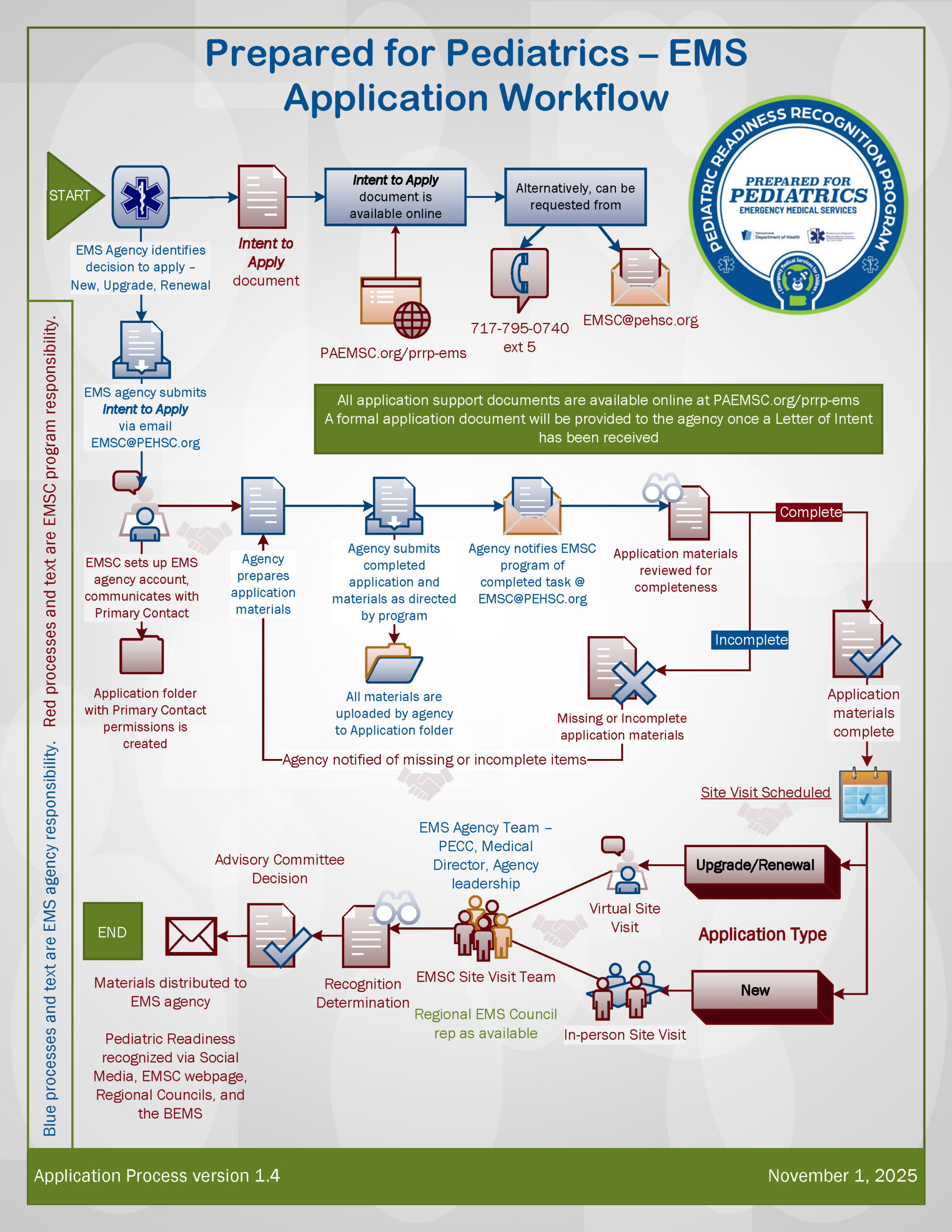
All interested Pennsylvania Licensed EMS agencies should download the program handbook and review the program outline and requirements before deciding which level they would like to apply to. Once ready and able to validate compliance with the level they intend to apply to for at least the previous 12 months, the agency should submit a completed and signed Intent to Apply form via email to EMSC@PEHSC.org. Please refer to the Application Workflow and process description in the program handbook for all steps and requirements.
A formal application document will be provided to the agency after a completed Intent to Apply has been received and the organization has been set up to submit documents.
Program Documents
Program documents include the initial Intent to Apply document, a detailed Program Handbook, supplemental forms to submit with the Application, and support documents to assist with tracking of required elements.
A formal application document will be provided to the agency after a completed Intent to Apply has been received and the organization has been set up to submit documents.
Community Outreach Prevention Programs

CPR
- American Red Cross Child and Baby CPR
- American Red Cross CPR for Schools
- American Heart Association Pediatric First Aid CPR AED
- Health and Safety Institute Pediatric First Aid | CPR AED
ACS Stop the Bleed (https://www.stopthebleed.org/)
Bicycle safety
Pool safety
Babysitter Training
- American Red Cross Babysitting and Child Care Training.
- Health and Safety Institute Child and Babysitting Safety
Safe Transport – Approved DOH ConEd course
National Pediatric Readiness Assessment
The NPRP closed in July 2024. Specific survey reuslts will be shared when available. Survey participation in Pennylvania identified several items that will assist us in analyzing specific survey responses.
Detailed reports expected late 2024.
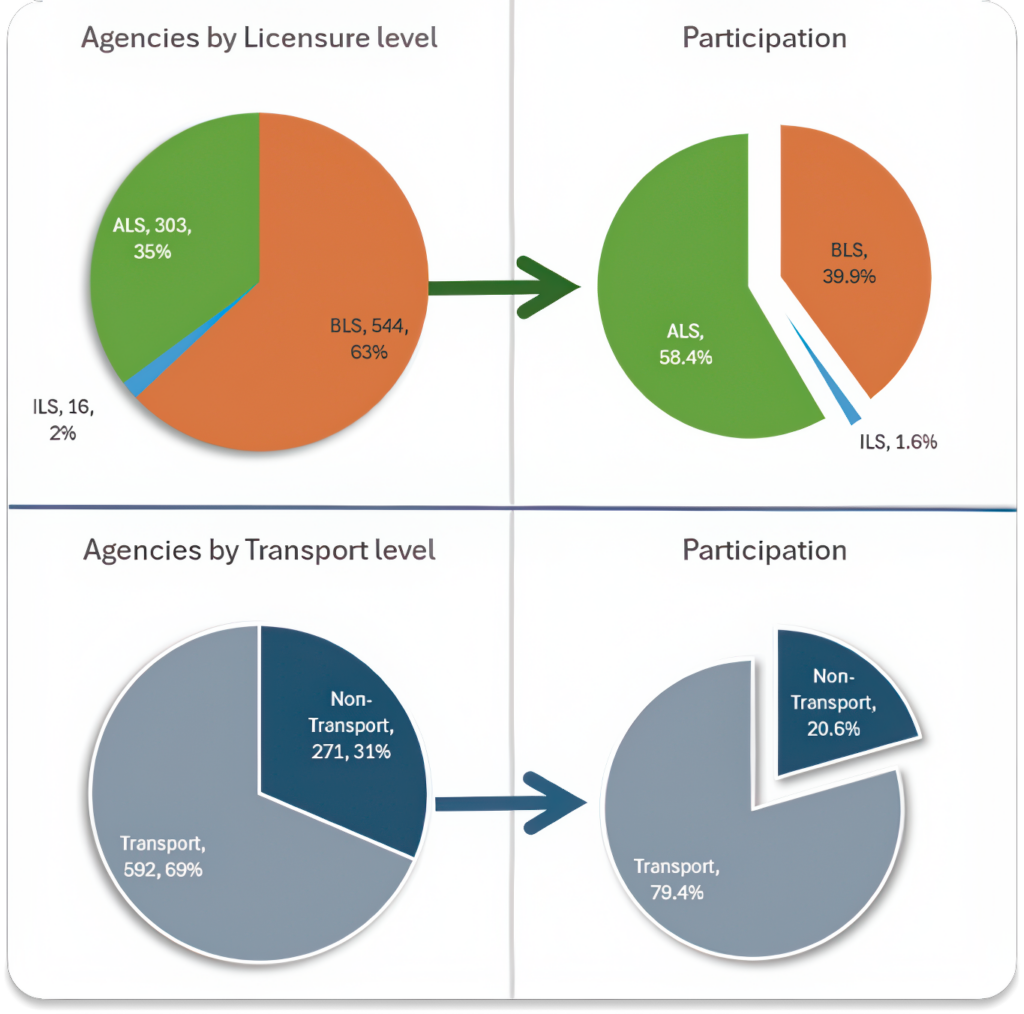
Pennsylvania Response Statistics
Agency Licensure level
- ALS 58.4% response rate of all respondents
- IALS 1.6% reponse rate (low n)
- BLS 39.9% response rate
Agency Transport level
- Transport capable 79.4% response rate of all respondents
- Non-transport 20.6% response rate
- Agency licensure level will drive reporting
- Detailed reports expected late 2024